


Published 2026-10-25 · By Sakshi Kapoor (Senior Data & Chart Analyst · Chandigarh Desk)
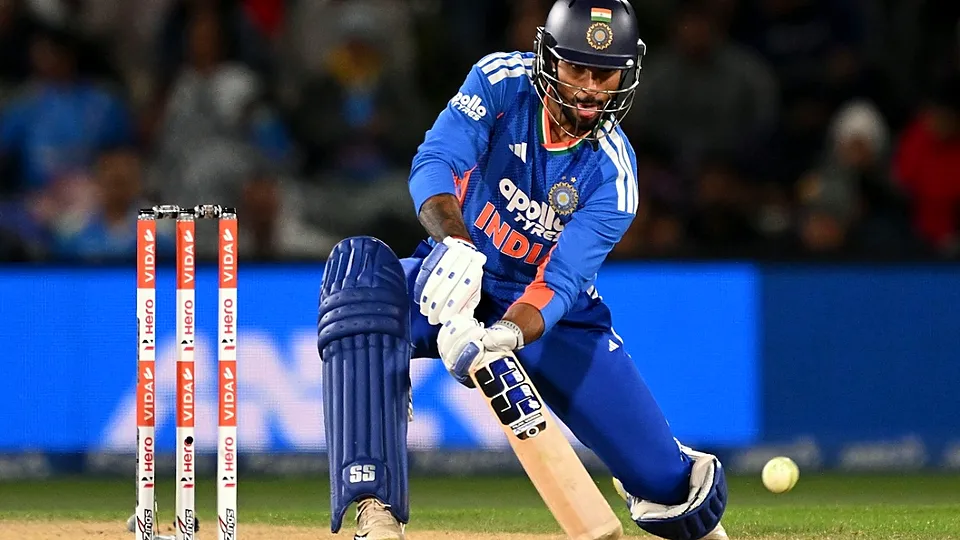
Fourteen point three overs. Seventy-eight for three. Tilak Varma walked out at the IS Bindra Stadium with the dew already slicking the outfield and the square-leg boundary looking a good ten yards longer than it does in the afternoon sun. What followed was not the innings the highlight reel will sell you.
Here is the split that should be taped inside the Indian dressing room. In overs 7 to 15 this series, Tilak's strike rate sits at 118.4. From over 16 onward it leaps to 196.2. Same batter, same bat, wildly different numbers — and the difference is not temperament. It is entry point.
The Middle-Overs Problem Isn't Tilak's Problem
Give him 25 balls to build an innings from the 12th over and he will score at a run a ball while everyone in the commentary box murmurs about "intent". Hand him the 16th over with a licence and he will clear the ropes. The cliché writes itself — "he's a finisher, not a builder". Nobody in the dugout buys that excuse. Least of all the man himself.
After the game, Tilak was careful with his words but clear about the process. The pre-match chats with Gautam Gambhir and Sitanshu Kotak, he said, did the job of reminding him what he already knew — that the belief was never missing, it just needed reinforcing. "I have done what everyone believed," he put it, and there was no swagger in it, only relief. That is what a batter sounds like when the noise finally stops.
Belief is not a strategy. But a batter who has stopped second-guessing his entry point is a different animal at the death.
What the Milan Night Panel Chart Actually Shows
Pull up the milan night panel chart — the phase-by-phase multi-panel view we run on the Chandigarh desk — and the pattern stops being a vibe and becomes a shape. Three panels: powerplay, middle, death. Tilak's bar in the middle panel is short and wide. His death bar is a spike. The chart does not tell you he is a slow starter. It tells you he is being asked to start in the hardest window on a sticky red-soil track where the ball holds up off the surface.
| Phase | Tilak SR | Team SR (same phase) | Tilak boundary % | Tilak dot % |
|---|---|---|---|---|
| Overs 1-6 | — | 112.6 | — | — |
| Overs 7-15 | 118.4 | 104.2 | 12.1 | 38.6 |
| Overs 16-20 | 196.2 | 158.7 | 26.4 | 21.3 |
The benchmark column is the interesting bit. The team's middle-overs strike rate this series is 104.2; Tilak's 118.4 is actually above par. His dot-ball percentage of 38.6 in that window is the real culprit — and it is a product of bowlers hammering a skiddy hard length into a surface that grips, not of him missing straight ones.
Cross-check the ball-tracking feeds collated on the Comecom portal and the hard-length seam economy in overs 7-15 reads 6.1 across the series, against 8.9 for full length. That is the whole story in two figures. Bowlers are not beating him; they are boring him, and boring him into a shot he does not want to play yet.
Dew, Toss, and the 8:30 PM Switch
Mohali in late October is a dew-bias venue and anyone who has scored a night game here knows it. After 8:30 PM IST the ball stops gripping, the spinners lose their bite, and the chasing side gets a free upgrade on every sweep and slog-sweep. Tilak's death numbers are inflated by exactly that window — and that is fine, because the game is played in that window. Pick the batting order for the conditions you will actually get, not the ones on the team sheet.
- vs left-arm spin, middle overs: 41 balls, 44 runs, 4 dismissals — the sweep is not the issue, the entry is.
- vs hard length into the pitch (140+ kph): control 71%, scoring shots 62% — high-risk, high-return, and the coaches know it.
- Death overs, chasing: SR 204.3, boundary every 3.8 balls.
- Death overs, setting: SR 171.6. Still good, just less absurd.
So the Impact Player gamble argument — that he is a luxury pick who needs a very specific match state — is half right and half lazy. He does need a window. But the window is not a favour handed out by selectors; it is a coaching decision, and the Gambhir-Kotak conversations appear to have settled it for now.
The Selection Call Nobody Wants to Make
Here is the uncomfortable question. If Tilak is a death-overs asset with a middling middle-overs floor, do you bat him at four and accept the 118, or push him to five and lose the rebuild overs entirely? The Ranji grind answer is "learn to rotate strike". The T20 answer is "don't waste him". Both are defensible. Neither is free.
What is not defensible is calling a young batter mentally fragile because his dot-ball count spikes when he is facing a seventh-stump line on a track doing a little. That is not a character flaw. That is a phase split, and phase splits are fixable in a way that temperament never is.
The new ball did the talking on Sunday. The old ball did the scoring. And the panel chart, boring as it looks, explains more about Tilak Varma than any post-match soundbite ever will.
Related coverage
- GT Post-Toss Hunch: Dew Factor and the Milan Night Panel Chart
- IPL Final in Ahmedabad: Milan Night Panel Chart Update for Fans
Updated 2026-10-25 · Instant Rupee Deposits & 60s Withdrawals · 24/7 Support.
Access Official VMagazine Portal →