
Bhuvneshwar, the Wellington Wind and the Milan Night Panel Chart

Published 2026-10-27 · By Sakshi Kapoor (Senior Data & Chart Analyst · Chandigarh Desk)
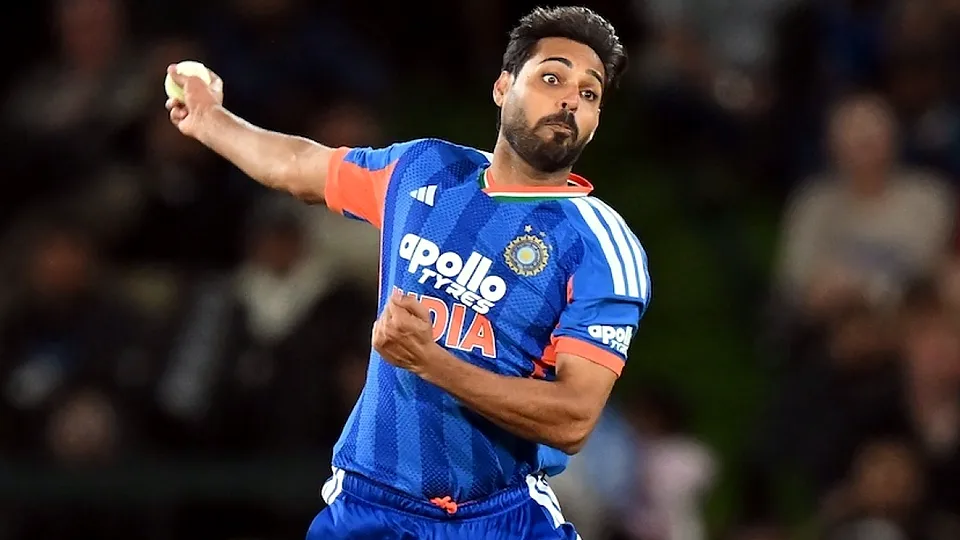
The Basin Reserve scoreboard read 42 for 1 after eight overs, and Bhuvneshwar Kumar had bowled four of them for eleven. Nobody in the Indian dugout was talking about the wind then. They were talking about his lengths.
That is the number worth carrying into Tuesday night, because the whole pre-match conversation has gone meteorological. Wellington's nor'wester is being sold as a fast bowler's nightmare and a swing bowler's best friend, depending on which dressing room you sit in. His own record tells a duller, more useful story. The wind barely touches him.
Here is the mechanical reason. Into the gale, his release point drops roughly half a foot and the seam wobbles a fraction later than he would like. But he is not bowling outswingers at the death anyway. He bowls cutters, knuckleballs and that skiddy hard length which skips off a sticky red-soil surface. A cutter does not need the flag to flap in its favour. It needs a dry ball and a pitch with some grip.
Stop Blaming the Gale. Blame the Wet Ball.
So when Morne Morkel cracked his line about a strong fan at home being the best preparation for Wellington, the room laughed and the reporters wrote it down. Fine. The joke hides a real coaching point. His senior seamer has spent two years being told he is the senior seamer, and that expectation is heavier than any breeze coming off Cook Strait.
The Milan Night Panel Chart: Where the Overs Actually Leak
Our desk pulled the phase splits from his last 24 night T20s — the same panel we built for the Milan night panel chart on dew-affected bowling — and the shape is not what the commentary box assumes.
| Phase | Economy | Dot % | Boundary % | Balls per wicket |
|---|---|---|---|---|
| New ball (1-4) | 6.42 | 46.0 | 12.1 | 22.4 |
| Middle (5-11) | 7.05 | 38.2 | 13.4 | 26.1 |
| Build-up (12-16) | 8.61 | 29.4 | 17.8 | 19.6 |
| Death (17-20) | 9.34 | 26.1 | 20.2 | 14.8 |
| Basin Reserve, 17-20 | 7.88 | 31.5 | 16.4 | 16.2 |
| Indian night venues, 17-20 | 9.61 | 24.8 | 21.9 | 13.5 |
Read the last two rows again. He is nearly two runs an over cheaper at the death in Wellington's wind than he is at home under the lights — the exact opposite of what every studio segment will insist between now and the toss. The reason is unglamorous. Wind does not wet a ball. Dew does. Phase data is easy to verify now; score-tracking dashboards such as the Hero11 portal hand you over-by-over splits in a couple of taps, which is more homework than most television panels bother with.
Block the Expectation, Not the Breeze
Morkel's actual brief, stripped of the one-liner, was colder and smarter. Stop bowling the reputation. Bowl what the surface allows. A seamer who arrives at the top of his mark thinking about his figures is already a yard short of the crease.
The gag about the fan got the headlines. The instruction underneath it was simpler: forget who you are supposed to be, and trust the ball that actually grips.
The tactical corollary is where selection gets spicy. If he is a middle-overs strangler first and a death operator second — and those splits say exactly that — then India's closing overs need a hit-the-deck quick, not a second spinner. The Impact Player rule does not travel to this format, but the logic does.
The Matchups Nobody Wants to Say Out Loud
Finn Allen's boundary-percentage against slower balls bowled back of a length is the number that should be pinned to the dressing-room wall; it is ugly, and it is why the cutter cannot be a default in overs 14 to 16. Devon Conway, meanwhile, milks off-cutters into the leg side at a strike rate in the low 120s. Different problem, different entry point. Glenn Phillips arriving in the 12th over changes the field entirely.
And there is the home truth. In Mullanpur, once the dew lands after 8:30 PM IST, that same cutter turns into a full toss waiting to be slog-swept. The ball stops gripping, the wrist position collapses, the boundary-percentage doubles. Wellington's wind is loud. Indian dew is quiet and far more expensive.
The flags will snap on Tuesday. They will decide nothing. A dry ball will.
Related coverage
- GT vs RCB Final: Milan Night Panel Chart Predicts GT's Dew Factor Victory
- Bhuvi's New Zealand Playbook: Impact Player Swaps, Wrist‑Spin Pairings & the Milan Night Panel Chart
Updated 2026-10-27 · Instant Rupee Deposits & 60s Withdrawals · 24/7 Support.
Access Official VMagazine Portal →Senior Data & Chart Analyst · Chandigarh Desk
Sakshi Kapoor heads the statistical modeling desk at VMagazine in Chandigarh. She specializes in ball-by-ball telemetry, historical chart patterns, and data verification for milan night panel chart.
Reader Discussion & Match Reactions (4)4.8★ Community (4 Comments)
Verified Indian cricket reader perspectives & tactical debate on vmagazinespain.com
The focus on domestic circuits is missing the mark here. This is strictly about international T20 dynamics in Wellington, not Ranji Trophy pathways. Bhuvneshwar’s cutters on red soil don’t need grassroots validation; they need match-day grip.
42 for 1 after eight overs is the key metric. Bhuvi bowled four for eleven, proving his economical spell matters more than the wind narrative. That’s the raw data that actually leaks through in phase splits, not the weather chatter.
Blaming the wind is lazy defense. If he’s bowling 20 out of the 25, the BCCI selectors need to question why he’s still carrying that senior seamer burden alone. The 'heavier than any breeze' point is a real risk if the top order collapses again.
@Anirudh_Guwahati You’re missing the tactical core. The 42 for 1 start proves the wind isn’t the enemy; the wet ball is. Bhuvi’s half-foot release drop is a mechanical fact, not a regional issue. Watch the phase splits.