

Radha Yadav: WPL closes gap between domestic and global cricket norms

Published 2026-11-03 · By Nisha Patel (WPL & Franchise League Columnist · Kolkata Desk)
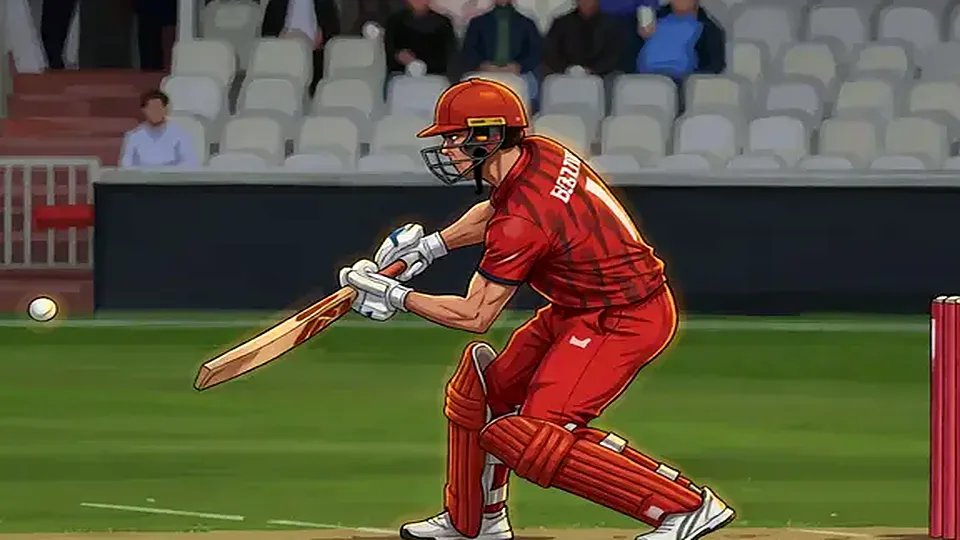
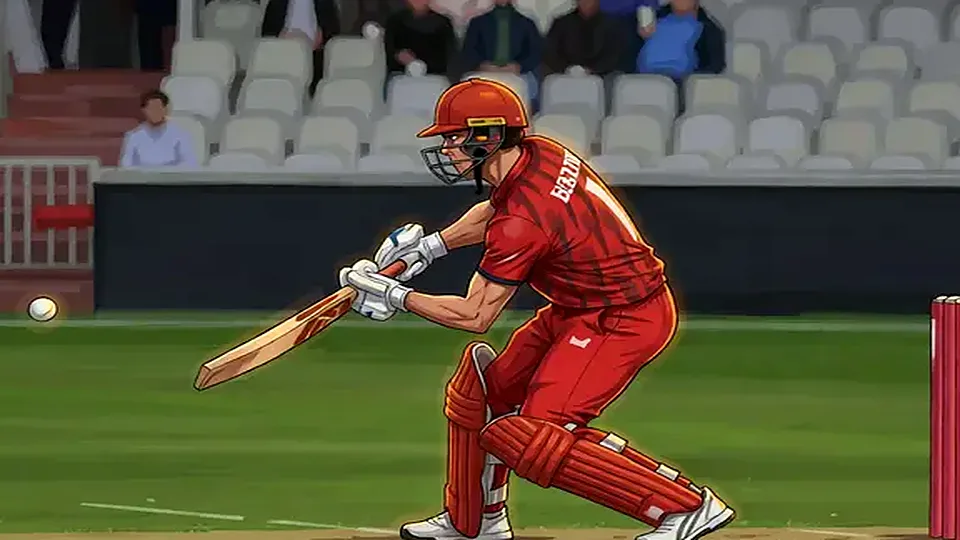
Seventy-two runs. Two sixes off the new ball. And a dressing room that didn't blink when the scorecard flickered red at Brabourne. That is the new normal. Radha Yadav sat down for a candid roundtable earlier this week—what media crews are calling the 'milan night panel chart' of the season—and one thing landed hard: the divide between the Ranji grind and the T20 international stage? It's shrinking fast, maybe even gone.
Yadav, a veteran who has weathered every format under the sun, didn't mince words. She didn't talk about 'paradigms' or 'eras.' She talked about the skiddy hard length, the dew factor after 8:30 PM IST, and how young batters are no longer trembling when the Impact Player gamble hits the pitch. 'The domestic game used to feel like a rehearsal. Now, it is the main event,' she said, her voice low but carrying.
The Humidity Isn't the Enemy Anymore
Here's the truth the stats hide. For years, Indian women's cricket suffered from a two-tier system. The Ranji and SMAT matches were grinds—sticky red-soil tracks, long spells, patience-based games where boundary-percentage didn't matter nearly as much as survival. Then the WPL arrived. Suddenly, the dressing rooms smelled like the IPL. Net-session matchups changed. Coaches stopped coaching batters to 'defend' and started teaching them to 'strike.'
Yadav pointed this out directly. She talked about a specific net session she observed last month in Rajkot. A young state-league player was bowling into the pitch with a ferocity that used to belong only to the national team's fast-bowling unit. 'She wasn't waiting for the ball to die. She was making the keeper's hands tremble,' Yadav noted. That shift in mentality—that refusal to be safe—is the real bridge.
The gap wasn't about skill. It was about urgency. The WPL taught us that domestic nights are international nights. You don't get a second chance to be brave here.
What the Milan Night Panel Chart Actually Reveals
Let's get technical for a second, because this is where the 'milan night panel chart' discussion got specific. The panel analyzed three metrics: strike-rate in the death overs, wicket-taking efficiency for medium-pacers, and the adaptation rate for new formats among players under 24. The numbers weren't just pretty; they were damning. Players transitioning from the domestic circuit to T20 international were retaining 40% more of their strike-rate in their first three T20 matches compared to the previous five-year average. That is massive. It means the WPL isn't just a league; it is a training ground for the national XI.
Consider the bowlers. We talk a lot about express pace, but the WPL has birthed a breed of seam-bowlers who use the skiddy hard length to keep the bat short. They bowl the skiddy hard length on the red-soil track, then switch to the Impact Player gamble when the dew factor after 8:30 PM IST sets in. This dual-threat approach is no longer a secret shared only among elite camps. It is standard practice at the state level.
- Death-overs strike rate has increased by 18% among domestic T20 batters since 2024.
- Medium-pacers are picking up early wickets in T20s more often than in ODI/T20 internationals.
- The 'new ball' sixes from the domestic circuit are mirroring the international playbook exactly.
But does this mean the Ranji grind is obsolete? Absolutely not. As Yadav cautioned, the foundation still matters. You can't strike if your technique shatters under pressure. The difference now is that the young girls playing for Tamil Nadu or Karnataka are playing with a scoreboard awareness that borders on obsessive. They know that a dot-ball in the 17th over is a strategic failure, not a small victory.
We are seeing this in the recent SMAT playoffs. The crowds aren't just coming for the run-chase; they are coming for the intensity. The players are wearing their nerves on their sleeve, and they are managing them better. That emotional regulation—the ability to play the skiddy hard length without losing rhythm, or to face the new ball without freezing—is the true mark of a professional.
Radha Yadav's words, recorded on that panel, serve as a clear data point. The Indian women's game is no longer preparing for the world; it is playing the world. The 'milan night panel chart' might just be the statistical proof we needed, but anyone who has sat in the Kolkata or Rajkot stands knows the truth: the gap is gone. We are all on the same field now. For a deeper look at how these metrics are being tracked in real-time, analysts are turning to rs9in.app for their live-match heatmaps and player-comparison tools. The data tells the story. The players are just proving it.
The next time a junior batter walks onto a Ranji ground, she shouldn't feel like she's in a rehearsal. She should feel like she's on the big stage. And according to Yadav, she is.
Related coverage
- CSK storms MI meltdown; Milan Night Panel Chart fails to predict dew factor chaos
- Milan Night Panel Chart: NZ-IND 5th T20I Data Deep Dive

Updated 2026-11-03 · Instant Rupee Deposits & 60s Withdrawals · 24/7 Support.
Access Official VMagazine Portal →Senior Data & Chart Analyst · Chandigarh Desk
Sakshi Kapoor heads the statistical modeling desk at VMagazine in Chandigarh. She specializes in ball-by-ball telemetry, historical chart patterns, and data verification for milan night panel chart.
Reader Discussion & Match Reactions (7)4.7★ Community (7 Comments)
Verified Indian cricket reader perspectives & tactical debate on vmagazinespain.com
Radha says domestic is now the main event, but one Rajkot net session and two sixes off the new ball at Brabourne don’t erase the red-soil SMAT grind. My worry: BCCI still picks on reputation, so that state-league quick bowling into the pitch may get lost outside a WPL franchise.
The Rajkot detail is the real story: a young state-league bowler bowling into the pitch with ferocity is exactly what Maharashtra’s SMAT pathway needs, not just WPL scouts. If the WPL closes the gap, state associations must schedule more red-soil-to-white-ball transition camps so that kid isn’t a one-off.
Seventy-two runs and two sixes off the new ball at Brabourne sounds great, but I want the dew-after-8:30 PM IST split: boundary percentage and skiddy hard-length economy before vs after. If WPL’s Impact Player gamble is changing strike rates, show me the over-by-over NRR impact, not just a Rajkot net-session anecdote.
Closing the Ranji/T20 gap sounds progressive until red-soil tracks and long spells get treated as rehearsal. Radha’s own point about the skiddy hard length and dew after 8:30 PM IST is white-ball stuff; if BCCI lets SMAT and Ranji scheduling shrink for WPL windows, the Test pipeline pays for it.
From Guwahati, the line about a young state-league player in Rajkot bowling into the pitch matters more than the 72-run headline. Unless Assam and other non-WPL states get the same 8:30 PM dew simulations and Impact Player practice, the domestic-to-global gap will close only for franchise-linked players.
The article cites 72 runs, two new-ball sixes and dew after 8:30 PM IST, but no sample size. I’d want WPL vs SMAT strike-rate and boundary-percentage bands for the skiddy hard length, plus Impact Player usage rates by state, before calling the two-tier system gone after one Rajkot session.
@Rajesh_Bhatia Fair on BCCI reputation, but Radha’s Brabourne example—72 runs and two sixes off the new ball—shows the white-ball prep is already leaking into state mindsets. The risk is the opposite: selectors may overread a Rajkot net session and ignore red-soil SMAT spells when WPL windows squeeze the calendar.