

Cricket's New Frontier: India's North American Odyssey and the Milan Night Panel Chart


Published 2026-11-19 · By Dev Menon (Lead Cricket Correspondent · Bengaluru Desk)
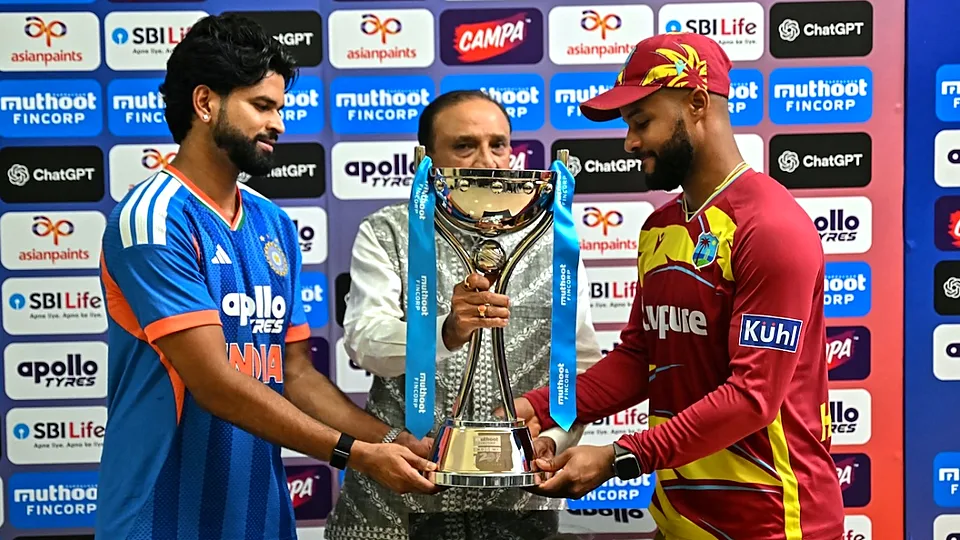
A dusty outpost in Washington DC. A concrete bowl in Los Angeles. A chilly evening in Toronto. This is where the West Indies have decided to 'host' India next year. It is a decision that smells more of a boardroom spreadsheet than a captain's tactical huddle. Why play in the Caribbean when you can chase the diaspora dollar in the States?
The wire reports are thin. The implications are heavy. We aren't talking about a friendly exhibition or a celebratory lap. This is a bilateral T20I series played on surfaces that likely have as much cricketing history as a freshly paved parking lot. For the Indian squad, it means trading the humid breeze of Bridgetown for the artificial bounce of North American strips.
The Commercial Gamble vs. The Cricket Grind
Let’s be honest. This isn't about the growth of the game. It’s about the gate. The BCCI and CWI know that a ticket in LA sells for five times the price of one in St. Lucia. It's a purely transactional move. While the administrators count their coins, the players are left wondering about the skiddy hard length of these unknown pitches. Will the ball zip? Will it hold? Or will it be another mindless slog-fest on a flat deck?
It reminds me of the chaotic energy of a milan night panel chart—purely speculative, driven by patterns that don't always make sense, and ultimately a gamble on where the numbers will land. Much like those charts, the scheduling here feels like a bet. The boards are betting that the fans won't care about the lack of traditional 'home' atmosphere as long as Virat and Rohit are in the frame.
The Logistics of a Mid-Series Meltdown
Travel is the silent killer. Moving a 30-man contingent across three different cities in North America is a nightmare. The jet lag alone will wreck any rhythm. Imagine trying to find a groove in the middle-overs choke when your internal clock thinks it's 3 AM in Bengaluru. It is a recipe for sloppy fielding and erratic bowling at the death.
- The Surface Risk: No Ranji grind prepares you for a synthetic-hybrid pitch in DC.
- The Dew Factor: North American evenings are unpredictable. A sudden dampness after 8:30 PM IST could turn a defending chase into a slippery comedy.
- The Impact Player Gamble: How do you manage a bench when the venues change climate every four days?
Can the New-Ball Burst Survive the Hype?
Tactically, this is a mess. India's pace attack thrives on consistency. They need a predictable bounce to execute those searing yorkers. On these makeshift grounds, the 'home' advantage for the West Indies is non-existent. They are essentially playing away from home in their own series. It’s a bizarre arrangement that strips the game of its soul for the sake of a few more luxury boxes.
"We are treating the sport like a touring circus. The cricket is becoming secondary to the venue's zip code."
I’ve spent fifteen years in the press box. I've seen the game evolve. But this? This is different. When the boundary-percentage becomes the only metric that matters to the organizers, the actual contest suffers. We are trading the sticky red-soil tracks of tradition for the sterile glitz of the USA.
The players will adapt. They always do. They'll find a way to hit the gaps and nail the death overs. But as a student of the game, I find this shift unsettling. We are no longer playing for the history of the venue; we are playing for the visibility of the brand. The West Indies have surrendered their shores, and India is just along for the ride. It's a strange new world. Let's hope the cricket survives the commute.
Related coverage
- Siraj, Thakur and the Milan Night Panel Chart Behind NZ's Bowl-First Call
- Gambhir’s Gamble: Impact Player, Left‑Right Pair and Boundary Maths Against NZ – Milan Night Panel Chart Reveals the Odds

Updated 2026-11-19 · Instant Rupee Deposits & 60s Withdrawals · 24/7 Support.
Access Official VMagazine Portal →Senior Data & Chart Analyst · Chandigarh Desk
Sakshi Kapoor heads the statistical modeling desk at VMagazine in Chandigarh. She specializes in ball-by-ball telemetry, historical chart patterns, and data verification for milan night panel chart.
Reader Discussion & Match Reactions (5)4.8★ Community (5 Comments)
Verified Indian cricket reader perspectives & tactical debate on vmagazinespain.com
The only hard number is LA tickets at five times St Lucia prices, which explains pushing this bilateral T20I to Washington DC, Los Angeles and Toronto. But with zero overs or pitch data from those venues, I can’t model whether the skiddy hard length favours India or West Indies.
Calling this a West Indies home series in Washington DC, Los Angeles and Toronto is exactly the boardroom spreadsheet Dev Menon flags. My worry is BCCI and CWI are betting on diaspora gate receipts while asking players to adapt to unknown surfaces with no traditional home advantage; that’s a risk to the cricket, not growth.
Before BCCI chases diaspora dollars in Washington DC, Los Angeles and Toronto, I’d like the same energy for domestic pathways—Ranji and SMAT players still get ignored when scheduling is shaped by CWI and BCCI gate receipts. A bilateral T20I on unknown North American pitches tells us nothing about India’s red-ball or state depth.
From a data desk view, the Milan night panel chart comparison is apt: this series is a bet built on one clear number, LA tickets at five times St Lucia, and several unknowns—pitch bounce, ball zip, and whether Toronto’s chill changes conditions. I’d want venue-wise T20I scoring rates before trusting the scheduling logic.
@Saurabh_NRR exactly—the LA five-times-St-Lucia gate is the giveaway, but you’re missing the player side: BCCI is sending India to a concrete bowl in Los Angeles and a chilly Toronto evening, where that skiddy hard length could turn into a pure slog-fest if the deck holds nothing.